Monday, March 25, 2013

SEVENTIES SITCOMS: 1970-1971: A SHOCK TO THE SYSTEM


"The program you are about to see is All in the Family. It seeks to throw a humorous spotlight on our frailties, prejudices, and concerns. By making them a source of laughter, we hope to show -- in a mature fashion -- just how absurd they are."


JANUARY 12, 1971

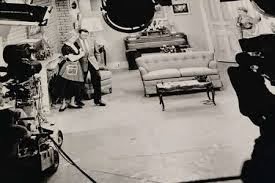
The warning was clear.   You, the viewer, are about to witness frank sexuality, profanity, overt racism, loud political discussions, and the sound of a toilet flushing.  And also the wholesale revamp of the American sitcom.

Norman Lear and his partner Bud Yorkin worked in the early years of television as comedy writers.  In the sixties they wrote, produced and directed various feature films, mostly social satires touching on subject matter that pushed the borders of what was--at the time--mainstream star-driven product.  “All in the Family” was based on the British sitcom “Til Death Do Us Part” and Lear and Yorkin formed Tandem Productions to Americanize the dysfunctional Garnett family:  racist, close-minded dad; dimwitted good-hearted wife; lay-a-bout yet socially progressive son in law; and devoted yet sexually liberated daughter.  They are now the Bunkers from Queens NY: Archie, Edith, Mike and Gloria.  Originally taped as a few pilots (with some different casting), ABC turned down the program.  After being reworked a third time, CBS bought it and placed it in a mid season time-slot.  Fred Silverman, head of programming for CBS, was in the process of a “rural purge”-- he was going to remove still-popular hillbilly farces and gentle rural family sitcoms with more urban, sophisticated and topical programs.  “Cutting down the trees," as Pat Buttram (Mr. Haney) put it.

In the 1970-1971 season, Americans saw the final seasons of so many beloved sitcoms from Mayberry to Hooterville.  And, when the Bunkers--premiering to uninterested viewer numbers despite the controversy--showed up in summer reruns to stellar ratings, the die was cast.

Combined with the premiere of what many believe to be the best sitcom of all time, "The Mary Tyler Moore Show"--with its smart writing, sharp character development, and replacement of the nuclear family with workplace alliances--the revolution had begun.

IN TANDEM:  LEAR AND YORKIN

Lear and Yorkin would develop most sitcoms throughout the coming decade.  Many were spin offs of "All in the Family".  Or even spin offs of spin offs.  Lear and Yorkin would split up around 1974 with Yorkin forming his own company.  Between the two of them, they owned the decade when it came to sheer quantity--if not necessarily quality.  Lear’s content was topical in that movie-of-the-week way.  Continuing story lines were not uncommon.  His actors came mostly from Broadway as opposed to the stock sitcom actors of year’s past.  Recalling the immediacy of a Broadway play (or early live TV) Lear’s programs were shot on three cameras in front of a studio audience on Hollywood sound stages.  The difference between his programs and those of say, Desi Arnaz or Sheldon Leonard, is that he shot on videotape rather than film.  Oftentimes the acting seemed stagy with the stage-trained actors in tightly framed close-ups.  The sets looked like sets with the overly-bright flat lighting.  Studio audiences were encouraged to hoot, clap, ooh and aaah, which they did with very little prompting.  The audience almost became part of the show:  witnessing, along with you-- the home viewer--a laugh-filled but somewhat frightening expose of ourselves and our society.  Warts and all.

And those first episodes covered almost everything: racial prejudice, unemployment, the politics of Richard Nixon, homosexuality, women’s lib, and religion-- all with that flushing toilet, lots of yelling and lots of cussing!  But it was extremely funny.  The acting was top-notch and the best writers and directors (from the previous sitcom era actually) were on board for this experiment.  The characters were broadly drawn, yet complex.  The humor was fast, furious, bombastic and sometimes vulgar.  The situations were dramatic and life-changing.  The audience howled and gasped.  Sophistication and wit were left to someone else, starting out on her own.

COMES THE KITTY: MTM AND MR. TINKER

James L. Brooks, who worked in the broadcast news industry and developed and wrote for network television (most recently the critically acclaimed “Room 222”) teamed up with many of the best writers in TV to give birth to Mary Richards.  Grant Tinker and his wife Mary Tyler Moore formed a production company, MTM,  and hired Brooks to make TV history.  When Moore teamed up with former TV husband Dick Van Dyke in a variety show reunion, her comedic timing was as sharp as ever.  CBS bought the idea of her own show as a newly divorced woman on her own with the caveat that she  cannot be divorced.  Rob and Laura Petrie could NOT be divorced as audiences (being given little intellectual credit by studio execs) would turn away in droves.  So, in the same season that Archie Bunker single-handedly broke most taboos at the time, Mary Richards had to be “left at the altar” rather than suffer the D word.  But she wasn’t Doris Day or Ann Marie or Gidget.  Mary had a few “experiences” and the show was written well enough that audiences didn’t have that fact hit them over their head.  Well, audiences, that is, that could have handled the dreaded divorce scenario.  

MTM’s sitcoms were very different in tone and appearance from Lear's.  They hewed more closely to the Desi Arnaz model, filmed with three cameras before a studio audience.  The audience was tamer but savvy.  Musical transitions and location shots added to the classiness of the productions.  The writing was solid and the direction was on par with the acting:  superb.  Sadly, MTM would veer into videotape usage (probably to save costs) in the latter part of the decade to ill effect.

The third most prevalent 70's sitcom creator, Garry Marshall, would also premiere “The Odd Couple” this season.  But his style would not become signature until his teammates at Paramount were churning out a multitude of series for ABC, mostly of the nostalgic bent, formatted much like the MTM shows, but without the quality and with the hooting and applause of the Lear shows sans the controversy.

In this series of articles by season, each year I will start by listing the shows in order of ratings for that year.  I feel it is better to reveal the tastes at that time in order to reflect the true nature of the audiences on their path to sitcom maturation in the 70’s.  It is more interesting, for instance, that The Brady Bunch was never a top-30 show at the time but would live on in nostalgic reverie through reruns and pop culture.  I’ll follow up the top rated sitcoms with the returning series and notable premieres each year. 

The previous two seasons had seen the end of many long-running escapist 60's sitcoms:  I Dream of Jeannie, Get Smart, The Flying Nun and Petticoat Junction.  Gomer Pyle USMC, still at the top of the ratings when it was cancelled in 1969 reverted to a variety format, The Jim Nabors Hour" to showcase the star's singing ability.  Although the previous sitcom's actors returned for a silly recurring skit "The Brother In Law" which was a bit more contemporary and the ratings still in the top 30, the purge took hold as this newer series was also cancelled at the end of the 1970 season.  The accent must have done it.  The variety show "Hee Haw" also fell victim to the CBS cancellations but flourished in syndication for decades to come.

RATINGS WINNERS: 1970-1971

This year was definitely transitory due to the strange mixture of returning old favorites and the premiering milestone series. Consider yourself warned by the ensuing programming schizophrenia.  As “All in the Family” was a CBS hit only during summer reruns, you won’t find it in the top 30 programs this year.

#3. Here’s Lucy (CBS): Hard to believe Lucy would be the highest rated sitcom in this year of change.  But the third season of her newly formatted “hipper” show was more of the same.  Lucille Ball's character, widow Lucy Carter (no longer Carmichael) was joined by her real-life kids, now hip teens. The famous Richard Burton/Elizabeth Taylor episode as well as shenanigans with Sammy Davis, Rudy Vallee, and Jack Benney filled the year.  There may have been some slight references to women’s lib by her mini-skirted daughter, but Lucy was still pretty much Lucy in style and content.

#15. Mayberry RFD (CBS).  Still highly rated, the third year of this " Andy Griffith Show" sequel would be its last due to the “rural purge.”  Alice Ghostly replaced Aunt Bee this year and that was as controversial as it got if you don’t count Goober finally opening up a gas station or Goober getting lost in a cave or (heavens!) Howard becoming a “swinger.”  Women’s lib didn’t come up.

 Ironically, Andy Griffith himself tried TWICE to return to TV this season.  First, in the fall, he attempted to match “Room 222” in its serio-comic attempt at examining youth-related problems in Headmaster (CBS).  When ratings were not good, he went back to his old formula (and laugh track) as the mayor of a small North Carolina town in The New Andy Griffith Show (CBS).  Again, no luck.  Andy always succeeded on Monday nights and these were both tried on Friday night.  Or maybe Silverman was right in his instincts.  Aaron Ruben, who produced for Andy in the 60’s had a hand in both of these series and he would end up crossing the cultural divide to work for Lear the next year in another landmark series featuring a different kind of "pop".

#19.  My Three Sons (CBS).  Audiences were still hanging on with the Douglas family in its eleventh season.  Already having safely endured a format, network and offspring changes since 1960 (wha?) the seventies saw the domestic trials and tales shared among the various family units.  As Robbie was raising his triplets, Chip married new girlfriend Polly and even adopted son Ernie started becoming interested in girls.  There may have been a reference to women’s lib with all these new wives around.  Had to have been.

#20.  Doris Day Show (CBS).  Well, widowed Doris Martin was becoming more liberated as she and her kids spent less time on the farm and more time living above an Italian family in San Fransisco where she worked for the magazine and spent lots of time with Duke the boxer (Larry Storch).  Don't ask.  So for the third season, the “rural purge” was occurring within the show rather than in the wholesale destruction of the franchise.  Wait til next year!

#21.  The Smith Family (ABC).  This mid season entry featured movie star Henry Fonda as a middle-America cop raising a family (including post-Opie, pre-Richie Ron Howard).    Another dramatic sitcom with no laugh track, the travails of a family having a father with a life-threatening job proved less-than hilarious. One of the few sitcoms without a widow actually had a wife character in danger of becoming one.  But the drug-related story lines definitely gave the series a dour tone contrasting with its breezy title credits.   This may have been an attempt by producer Don Fedderson ("My Three Sons" and " Family Affair") to gain street cred.

#22.  The Mary Tyler Moore Show (CBS).  This year saw the premiere of the best sitcom on TV (in my opinion).  I already covered the genesis of Mary Richards above.  And though she had to remain Not Divorced, the first season--dealing with the procurement of  her job at WJM with SPUNK, introducing Lou Grant, Ted Baxter, Murray, Rhoda and Phyllis, and fending off advances of most men in Minneapolis--still dealt with infidelity and separation.  Mary got back at CBS right off the bat when she and Rhoda pretended to be members of a divorce support group to meet men.  Hah.

The series would prove itself an qualified critical hit winning Emmy's for directing and writing.  Ed Asner and Valerie Harper would win supporting acting awards as Lou Grant and Rhoda respectively becoming the first "stated" non-stereotyped Jewish sitcom characters since The Goldbergs.  This would start a pretty long trend during the next seven years.

#25.  The Partridge Family (ABC).  The premiere of this musical family sitcom would prove that there was still room for lighthearted family fare.  As  long as there was rock-n-roll and the kids were really hip and good looking and could have fan clubs and billboard hits.  And, of course, Mom was a widow. And right off the bat there was an episode dealing with women’s lib.

RETURNING SERIES (in alphabetical order)

Jeb's last dance.
The Beverly Hillbillies (CBS).  In it’s ninth and final season, the Clampetts gasped to the finish line out of place and out of time.  The fish-out-of-water hayseeds had some continuing story lines that reeked of desperation:  Ellie May dated a Navy frogman and Granny thought he was a real frog. There was something about a Grunion invasion.   Trips to DC involved political misunderstandings while trying to give the President money (!) and get conned by Phil Silvers with cheap-looking process shots.  Oh, and women’s lib was brought up, but in the context of a gaggle of Japanese women who Jethro tried to….oh, never mind.  It’s over.  

Bewitched (ABC).  The seventh season of this hit series saw the ratings start to decline.  The second Darrin was wearing thin, there was a little warlock now, and Samantha’s evil twin took center stage. (Sitcom note: evil twins usually represent a shark jump.)  This season did take some bold steps, cloaking its messages about intolerance in a family-friendly magical comedy. Along with a visit from George Washington (Will Geer), an extended visit to Salem (during the witch trials--and all the hilarity that entails) as well as the famous “polka dot” episode about race relations remained an example of clever and subversive storytelling this series had provided since 1964.  

The Bill Cosby Show (NBC).  Cosby’s second and final season once again showcased his
No, I'll be back, you see.
gentle brand of humor sometimes interacting with students at the fictional LA school where his character taught.  There were also some wacky domestic situations and cameo guest appearances (Dick Van Dyke, Elsa Lanchester, and Don Knotts).  Mining humor from giving birth during a hellish rainstorm may work…after all it’s Cosby…but doing so without the requisite laugh track--refused by the star--probably confused the audiences and they didn’t watch Bill this year.

The Brady Bunch (ABC).  The second season saw the contrived premise of this extended family, widow meets widower, finally take hold.  Some of the most beloved and oft-played episodes emanated from this season though, such as Jan’s Makeover and Greg’s New Room.  Although there was some talk of women’s lib (via Marcia), the real controversy erupted with topics such as the dangers of gossip and practical joke-playing.

The Courtship of Eddie’s Father (ABC):  Although the Harry Nillson theme song and the fashions were hip, producer (and co-star) James Komack wouldn’t gain his 70’s sitcom grit until a couple of years later.  The closest widower Tom and his motherless son Eddie got to controversy this season was an episode about shoplifting.  Too many men in the cast for a women’s lib episode.

Fred Silverman's got plans.
Family Affair (CBS):  This extremely popular family comedy dropped off the radar just in time for the family part of the purge on CBS.  Buffy and Jody were getting older and less cute.  But teenage Cissy must have been getting cuter as a lot of stories revolved around her.  She even tackled women’s lib.  Well, actually, she tackled a lot:  The Peace Corp and Middle Eastern politics even came up. Nancy Walker, who was added to the cast the final year to help manservant French with the transition to cancellation, would begin her glorious reign as sitcom queen of the decade right here in Uncle Bill’s apartment.  Oh, and we meet the real Mrs. Beasley this season.

The Governor and JJ (CBS):  There was some political jabbing in the second and final season of this three camera sitcom.  It is interesting that this ended up being the show cancelled to make room for "All in the Family."  After all, the short-lived series about a conservative Midwestern governor and his meddling liberal niece reeked of Mike Vs. Archie energy.  But even the topical digs on media makeovers and scandal squelching  didn’t quite meet the litmus test for the shocking new times.  Or maybe it was just the low ratings.

Green Acres (CBS).  Hooterville, we hardly knew ye.  Whereas, the West Coast natives of this berg were drowning in desperate plot repetition and silliness in the Hills, Oliver and Lisa were, after five years--into their sixth season here--still trying to fix up their farmhouse.  Their buxom neighbors at the Shady Rest Hotel were smart enough to get cancelled the season before.   This burlesque, near-stoner third-wall-breaking humor remained consistent throughout the run and the series never really dates to this day.  Arnold the pig and Droby the Duck presided over the most controversial scenes (no women’s lib here).  The final episodes, with no resolution, were basically pilots for other series--one taking place in a Hawaaian hotel and the other in Oliver’s Manhattan law office.  It’s just as well that these pilots, hearkening back to the saccharine of yore, never got in the cockpit.

Hogan's Heroes (CBS).  As in the previous entry, this popular series would basically never deviate from its tone or formula.  The premise of a diverse group of Allied prisoners of war duping the bumbling Nazi officers was pretty much the same up through this, it's sixth and final season.  What's interesting is that within a year, a painted swastika would play into the dramatic plot involving the Bunkers....and within two years, a new military sitcom premiering would be one of the most relevant and popular and critically-acclaimed series of all time by dealing with the destruction of war head on rather than as a plot element to be danced around.

Julia (NBC).  The fact that the third season of this hit series saw a drop in high ratings was almost appropriate.  The sort-of groundbreaking sitcom--with it’s lead character being African-American--basically avoided any hot-button issues regarding race.  As the Jeffersons--fighting tooth and nail with Archie Bunker--became the new representatives of black culture on sitcoms, Diahnne Carroll’s Julia was more apt to be involved in story lines suited to Donna Reed.   Ms. Carroll parted ways with producer Hal Kanter and the series ended at just the right time in history.

Nanny and the Professor (ABC).  Returning for a second season due to its family-friendly Friday night time-slot (along with "The Brady Bunch"), this series didn’t offer much in the way of anything new.  Reminiscent of “Bewitched” in it’s mystical heroine and her various odd and equally mysterious relations mixing it up with a motherless family, this series relied on a cute dog and cute kids rather than any sense of wit from its pedigreed British players.

Room 222 (ABC).  After many Emmy nominations, ABC brought back this low-rated comedy-drama for a second season.  After "All in the Family," this was probably the most daring series this season in its subject matter.  The faculty and students of Walt Whitman High dealt with drugs, Vietnam, anti-Semitism, racial intolerance, lifestyle changes, culture wars, and reading Catch-22…all in ONE season.  Take that, Norman Lear!  And they did it without all of the histrionics.

That Girl (ABC).  The proto/anti-feminist, played by Marlo Thomas, spent this entire final
Turn the plane around.
season almost marrying her boyfriend (the Donald) of the previous five years.  There were lots of celebrity guests (including dad Danny) and the women’s lib episode actually involved getting stuck on an elevator on the way to the meeting.  Actually, Ann Marie did deal with issues of nudity, environmental activism, shoplifting, and prejudice against Mexican-Americans this year.  So there, Archie.  But Ms. Thomas got the last word in by refusing to have Ann get married at the end of the run--to prove that does not necessarily have to be the fitting end to a show about a single woman making it on her own.  So there, Mary.

To Rome, with Love (CBS).  Fedderson’s lesser known series, this family comedy about a motherless family (yes, again!) headed by a professor (John Forsythe) relocating his kids from Iowa to Rome didn’t find its audience in its second season.  Actually, "All in the Family" replaced the series in its time slot.  Moving to a different night didn’t help and neither did adding sitcom stalwart Walter Brennan in a supporting role.

NOTABLE PREMIERES:

"Give me one year, Felix. I'll get rid of the laughtrack"
The Odd Couple (ABC).  Garry Marshall’s first pairing with Paramount studios was adapting Neil Simon’s hit play and blockbuster film to the small screen.  The first season resembled the earlier versions of the property much more than the later seasons, what with the single camera framework and no live audience (laugh track though).  Also, the Pigeon Sisters played a large role in early episodes and the poker games were more prominently featured.  Nonetheless, Tony Randall and Jack Klugman did an excellent job of filling the shoes of Jack Lemmon and Walter Matthau, thus leading to years of critical success and acting Emmys.  The concept of divorce was also a major plot element in this show and was probably the first series to treat it as such.   

Jack Klugman's portrayal of Oscar Madison would garner him the Best Actor Emmy for a comedy this season.  He would beat out Carroll O'Connor's premiere season as Archie Bunker.  A feat.

 Paramount and Simon teamed up again for an sitcom adaptation of Barefoot in the Park
(ABC). Although the brave and timely idea of making the Wasp-y lead couple African-Americans did not quite have the desired effect of higher audience numbers.

All in the Family (CBS).  Yes, notable.  Emmy's for Best Comedy Series, Best New Series and the first of many Best Actress-Comedy awards for Jean Stapleton as Edith Bunker.  It all starts here.  and no one even started watching until just a couple of months before these awards were handed out.

Arnie (CBS).  In a subtle way, this urban sitcom tackled class warfare, one of the least covered topical themes in the early 70's.  Herschel Bernardi's main character was a dock foreman who works himself up to middle management.  The comedy is generated by the culture shock of the "nouveou riche" and Arnie's relationship with his wife and aloof boss.

Nancy (NBC).  Some fluff about the President’s daughter being courted and getting married.  Creator Sidney Sheldon (of "I Dream of Jeannie" and "Patty Duke Show" fame) missed the mark on this one.  There was probably very little political bite in this show and the hyped-up wedding never even happened.  That was reserved for a girl from the Bronx four years later. This forgotten series was replaced by:

From a Bird’s Eye View (NBC).Sitcom maestro Sheldon Leonard teamed up with UK production company ITV to come up with this swingin’ sixties…I mean, seventies series about two stewardesses, one American and one British (go figure) and their swingin’ singles adventures.  No women’s libs plots in this one but lots of mini-skirts.  Austin Powers would have loved this show.

Make Room for Grandaddy (ABC).  It seems fitting to end this crazy season on this title.  Danny Thomas decided to bring back his “Make Room for Daddy” cast and crew to rekindle the laughs from his earlier long-running Desilu series.  Retaining the three-camera setup and studio audience, but adding Rosie Grier and a storyline about mini-skirts for seventies credentials, this sequel probably relied too much on numerous celebrity cameos such as Bob Hope, Diana Ross, and even Sinatra himself.  Thomas's return actually lasted a couple of months longer than his previous spin off star-- Andy Griffith's failed rejuvenation.  With daughter Marlo bowing out this year, it was a temporary reprieve for  this sitcom dynasty.  Until producer son Tony would Make Room for Jody (Billy Crystal) seven years later with “Soap.” 

As the original was produced by Desilu, it was apropos that Lucy herself makes a cameo (as Lucy Carter, her current "Here's Lucy" character).    So as a perfect transition from the sitcoms of old to the new more permissive standard...here's Lucy mistaking Danny as a sex maniac.


VIDEO NUGGETS:

Andy and Barn didn't quite make it this time:


Even Opie couldn't pull it off with a movie star dad:


THE COURTSHIP OF JODIE FOSTER:

The very first pilot of "All in the Family" in 1968.

Friday, March 22, 2013

SEVENTIES SITCOMS: INTRO- 50's AND 60's REHASH


This is the first installment of a series of articles examining the television sitcoms in the seventies.  I find this era fascinating to examine for two reasons.  First, I remember watching these shows during a period when television viewing was a near obsession, from elementary school through high school.  Second, the decade represented a sea change in tastes and permissiveness in network broadcasting.  Beginning with the tail end of the Vietnam War and the debacle of Watergate and continuing with inflation, spiraling gas prices and a disco revolution, the seventies were an important decade in  historical and social terms.  The followup to newly enacted Civil Rights legislation and the hangover from a malaise created from political assassinations, race riots and cultural upheaval embellished the confusion of the seventies.

With this in mind, I intend to briefly examine season by season the network sitcom in relation to these events.

First up, a quick primer on sitcoms up until this time.

THE 50'S:

In the early days of television, most sitcoms were video reenactments of popular radio shows:  George Burns and Gracie Allen Show, Jack Benny Program, Life of Riley being the most popular.  Other popular radio adaptations were Amos n Andy, Beulah, and The Goldbergs.  These were later (rightfully) deemed controversial for their racial stereotypes and were pulled from syndication.  It wouldn’t be until over fifteen  years later that African Americans were featured in a sitcom prominently and with more respect and thoughtfulness. 

Lucille Ball and Desi Arnaz created I Love Lucy in 1951.  Probably the most beloved and revisited, this series was a landmark in so many ways.  Arnaz pioneered the use of the three-camera set up with a studio audience in Hollywood.   He used film rather than the kine scoped or live formats employed during those early years.  This insured reruns in perpetuity.  This model, the studio audience rather than a laugh track, would be a continuing format for sitcoms.  Throughout the fifties, Desilu produced more hits: Our Miss Brooks, December Bride, Danny Thomas Show aka Make Room for Daddy , Private Secretary, and (along with Danny Thomas) The Real McCoys.


In the early days, Hal Roach’s My Little Margie represented the out of body experience of odd  laugh track placement and sketchy editing.  Mr. Peepers used a studio audience in New York, but without the filming thus a classic is lost to future generations.

Nat Hiken’s The Phil Silvers Show (Sgt. Bilko) used the new format to great effect and critical acclaim while veering away from the domestic family formula. Bob Cummings added some leering spice with Love That Bob The Honeymooners is considered a classic with one full filmed season of the character sketch from Jackie Gleason's popular variety series.

The Adventures of Ozzie and Harriet, Father Knows Best,  Donna Reed Show, and Leave it to Beaver represented the gentle humor of the Eisenhower-era nuclear family.  The first time the standard family equation was broached would be in the first "swinger turned dad" premise: Bachelor Father.

THE 60'S:

With few exceptions, the sitcoms of the sixties represented an alternate universe to the social changes and historical events going on at the time.  The sitcom programming in first half of the sixties was populated by a  continuation of the safe family fare:  Ozzie and Harriet, Donna Reed, Danny Thomas were joined by My Three Sons.  Beaver’s adolescent antics continued along with the addition of  Dennis the Menace.  After her breakup with Desi Arnaz, Lucy would continue on her own with The Lucy Show, which took on three different formats during it’s successful sixties run.  Hazel, another tame domestic offering, would become the first popular sitcom broadcast in color--one of the few in the early sixties.

The past and the future.
The most popular premise of the sixties was rural America.  The bucolic sitcom (starting with Real McCoys) would blossom in Mayberry and Hooterville.   Desilu and Danny Thomas Andy Griffith Show and it’s blockbuster spin off Gomer Pyle USMC.  The first seasons, in black and white, represent some of the best comedic work in television. In the later color years (sans Deputy Fife), the show became sentimental, repetitive pablum.  Paul Henning came up with the Beverly Hillbillies for Filmways leading to cornpone meets borscht belt spin offs Petticoat Junction and Green Acres.  There was no sentiment or sap in Hooterville:  just misunderstandings, non-sequitors and cleavage.  Military comedies were also rampant if not as successful during this period, led by Gomer Pyle and McHale’s Navy.


Another trend (predating The Simpsons by decades) was the animated sitcom.  Hanna-Barbera, along with Screen Gems,  produced The Flintstones and The Jetsons  both of which would make cartoon history with their half-hour format and canned laughter.  Future sitcom runners Harvey Bullock and Ray Allen contributed to the stories and productions.

"You will make it, baby."
There were few deviations from the formulaic laugh track single camera sitcoms in the early part of the decade.  Hiken’s followup to Bilko, Car 54 Where Are You provided some urban relief.  The Many Loves of Dobie Gillis safely tiptoed into the growing youth (Beatnik) culture of the time while Gidget would examine the beach culture from a Disney-fied distance.  The highest critical acclaim would be heaped upon Dick Van Dyke Show.  A  powerhouse of writers and producers came up with this "inside showbiz" three camera workplace slash family comedy which would set the tone of most classic sitcoms in the next decade. The Desilu/Danny Thomas group teamed up with Sid Caesar’s cohort Carl Reiner and Sheldon Leonard (who would have a hand in most sitcoms for the next two decades) to provide jobs for Garry Marshall, John Rich, Jerry Belson, Howard Morris, Bill Persky and Sam Denoff, Alan Rafkin and, of course, Mary Tyler Moore.  Running parallel but with less success, critically and commercially was the Danny Thomas clone, Joey Bishop Show.


Belaboring the point.
Another  trend during the sixties was fantastical and high concept themes.  Some of these would be subversively political in nature such as critic's darling Bewitched (writers and   creators in Hollywood were a lot more liberal than the audiences at the time), but for the most part, like the hayseed comedies, mindless escapism was the driving force.Along with the aforementioned domestic witch and starting with Mister Ed (the talking horse),viewers in the sixties were eating their TV dinners with aliens (My Favorite Martian), competing macabre/monster families (The Munsters and The Addams Family), genies (I Dream of Jeannie), identical twins (Patty Duke Show), and paranormal spirits (Ghost and Mrs. Muir), and even a reincarnated talking car (My Mother, the Car).  The high concept sitcoms also could be extremely silly and almost juvenile in execution.  Sherwood Schwartz mined this slapstick territory with the classic Gilligan’s Island and the short-lived It's About Time.  The Civil War-era F Troop was a bit more clever but just as schticky.  Probably the oddest sitcom of the sixties was Hogan’s Heroes.  Basically a WWII espionage thriller (produced by Bing Crosby!) with a laugh track, the story of  bumbling Nazis being outwitted by an eclectic group of Allied prisoners was an unlikely hit for an audience watching Vietnam casualties pile up on the evening news.


Smart Comedy
Hogan and his crew failed to generate sharp or satirical laughs from the politics of the situation (rightfully, so, when you are dealing with the subject matter at hand) only from the situations.  This was left to Get Smart.  Created by Mel Brooks (another Caesar ally) and Buck Henry, this zany James Bond spoof garnered the most critical praise in the latter half of the decade for its parody and bite.  As all narrative programs were filmed and broadcast in color by 1966, most sitcoms remained single camera laugh track formats.  This was due mostly to the use of extensive exterior shots (bucolic) or special effects (magical realism).  The most heralded exception to this was He and She, a 1967 three camera sitcom which was the closest followup to Dick van Dyke and the precursor for MTM in its sophistication and insider storytelling.  Chris Hayward (Bullwinkle) and Allan Burns (soon to co create MTM’s series in the 70’s) were the driving forces in this ratings-deprived series.

CULTURE CLASH:

No doubt the candy colored sitcoms of the late sixties continued to be dominated by the ever popular Mayberry and Hooterville contingent, the ubiquitous Lucy, genies, witches and goofy Nazis.  Even the family sitcom continued with a reformatted My Three Sons.  The creator of that show, Don Fedderson, provided a second blockbuster of the time period with the tame but popular Family Affair.  But as the mod culture took hold, the psychedlic experiments in camera angle and editing would show up in the Beatles-influenced The Monkees--created by future Hollywood counterculture taste-makers Jack Nicholson and Bob Rafelson-- as well as the hyper kinetic Batman serials. Rock and roll youth culture was only alluded to as sort of a freak show plot element in the standard sitcoms popular at the time (see Rob Reiner's musical hippie sing with Jim Nabors in Gomer Pyle or "The Mosquitos" invade Gilligan's island.)  The burgeoning drug culture was rarely alluded to but clearly evident in the conceptualization of The Flying Nun, a highlight of the unreality of the times.  Feminism would be hinted at in the exploits of Ann Marie in That Girl, never a ratings hit, but buoyed by Marlo Thomas’s familial roots.  The Doris Day Show premiered but the early seasons of that showed squelched any hint of female empowerment as the recently widowed big city mom, you got it, moved onto a farm.  Even dad was a widower in Courtship of Eddie’s Father, created by future seventies sitcom guru James Komack, aided and abetted by a Harry Nillsen theme song to reference the time frame.

Well, it's still history.
It wasn’t until 1968 ( a year of upheaval and turmoil in the “real world”) that the black experience was represented in a sitcom with Julia.  Although the widowed (there it is again) nurse was surrounded by white supporting characters, her struggles raising her son alone alluded to a contemporary social problem, albeit indirectly.  Bill Cosby (who made history with I Spy years earlier) brought his gentle humor to another laugh track free sitcom The Bill Cosby Show, set mostly in a public school.  Jay Sandrich and Ed Weinberger created this show while James L Brooks and Gene Reynolds created another urban, racially diverse, serio-comedy set in a Los Angeles high school, Room 222.  All of these men, who would provide the highest quality comedy programming in the seventies were quietly ushering in a new vision of the sitcom, one that examined issues dealing with youth, drugs, race and sex.  Ironically, these topics would be examined in the next year by the much louder and bombastic voice of Norman Lear.   But 1968 wouldn’t let go of some things:  Andy left Mayberry but the town continued on (Mayberry RFD), Lucy reclaimed her two grown up hip kids and changed her name (Here’s Lucy) but still reveled in celebrity-filled shenanigans, and a silly little family comedy from Schwartz that would garner no ratings would premiere in 1969 and be watched and reference for generations to come (The Brady Bunch).


Very soon, new CBS head Fred Silverman will "cut the trees" down, leading the way for a more urban, sophisticated and socially probing situation comedy.

As you will see in future installments, the seventies would immediately usher in the controversy of Lear’s game-changing stable of hits and the MTM collection of critically acclaimed workplace comedies and later in the decade revert to Garry Marshall’s revisionist nostalgia and Silverman's new strategy of  sexually permissive and controversial (for the wrong reasons) content as part of the  “t and a” revolution.  Plus a return to martians and hillbillies by the end of the decade!

Most of these sitcoms I remember watching in reruns, either syndicated or “stripped” on daytime network TV or Saturday morning.  So they remain embedded in the fabric of the seventies if only as a reminder of how fast things were changing.


VIDEO NUGGETS:


One that got away, 1967:


Saturday, August 11, 2012

The Profit of Living in the Past


Social media has created this wonderful yet frightening enigma. It has allowed us to relive our past, revel in our history, learn new facts about those things we loved, discover truths that were hidden, and immerse ourselves in the long forgotten but easily accessible.

Although I have been away from my “retro” blog for awhile, I have posted quite frequently on my Facebook page various you tube clips and general minutiae related to those things I hold dear from the sixties and seventies. TV shows, movies, cartoons, comic books and related toys. With so many of the players of the day passing on this year, the tribute clips and quips have been frequent.

One of my Facebook friends, who is a professional in the cartoon/collecting business, recently posted a photo of a frame tray puzzle of a television cartoon that I had acquired as a child and still lives in my nostalgia crate in storage. Seeing that picture created a swell of joy that is very difficult to mimic in anything current regarding media or merchandising. Many of the commenters, probably baby boomers themselves, share that feeling, that bliss that occurs when those simple yet colorful and creative visions appear.

Switching suddenly, I will say that I also have an avid appreciation for all things seventies, especially television and film. This includes media I watched and didn’t really understand, media I loved and completely got, and media that I completely missed.

Growing up in the seventies was a wonderful thing for a kid hooked on TV. You had two things going on. (And you must remember: we had three networks and a public station…some cities had an independent station for reruns or syndicated programming).

First you had repeats of series from the sixties. Among these reruns (usually appearing in early afternoons before the news and on weekends) were all the escapist sitcoms, westerns and action series that were popular during the “Mad Men” era. A lot of these have been remade into mediocre big budget feature films to appease the boomer crowd. These series were broadcast during the sixties. The Vietnam war, history-changing political assassinations, riots, a growing counterculture, a nation re-examing itself.

But prime time television countered with the escapist escapades of hillbillies, witches, spies, and cowboys. The best American television came from the witty pre-Saturday morning cartoons from the early part of the decade or the quality anthologies of drama and suspense (see “Twilight Zone”) And occasionally, there were still repeats from the fifties mostly of “I Love Lucy” and “Perry Mason” and the Beav.

The second thing happening was the revolution in prime time. When CBS decided to “cut down all the trees” and de-ruralize still-popular yet tired programming, they created the golden age of television. While Lucy was still plugging along with the sort-of modern Bradys, Norman Lear and Mary Tyler Moore were the kings of comedy, offending and enlightening with the best comedy writing and acting since Dick Van Dyke ruled the sixties with premium laughs. So with the Vietnam War drawing to a slow close, changes borne in the sixties crystallizing into a new climate on civil and gender rights, Watergate creating a new cynicism in politics, and a postwar economy turning in on itself, the programming didn’t seek to repress but examine current issues. In a thoughtful way.

The latter part of the seventies led to the “t and a” revolution: titillation and innuendo became the standards for adult entertainment, disco replaced the Rat Pack of the variety hours, and crime shows were less gritty and more, well, bouncy. Fortunately, my puberty landed during this time. As I said, it was perfect.

And Walter Cronkite provided the news through both of these decades.

And as I rewatch the original seasons of SNL, I didn’t remember them being THAT subversive. I didn’t remember Barney Miller being THAT incredibly incisive. I didn’t remember Sonny and Cher being THAT hip. But I DO remember Charlie’s Angels being…well, you know.

As for feature films, my parents took me to see the latest Disney comedy or big screen cartoon. Occasionally, a non-Disney offering such as a Pink Panther sequel or Planet of the Apes film would provide a respite from the cotton candy provided by old Walt. Occasionally, I would be privileged enough to encounter a PG film at the multiplex…usually a disaster epic or a Bad News Bears chapter. But the TV networks would show edited versions of the big screen blockbusters. And I remembered seeing these Movie of the Weeks. Choppy pan-and-scan fiascos. I was cheated. As I rewatch these masterpieces now, they are revelations. I dismissed so many of these films because my initial exposure to them was as edited crap and I was too young to understand it anyway. Can you imagine? This was how I first experienced Ashby, Altman, Lumet, Nichols, Friedkin, Pollack, Pakula and early Scorsese, Coppolla, Spielberg, and Depalma. Comedy stylings of Woody Allen and Mel Brooks redacted of bite.

And the other side to that coin are the grind house flicks from the time period. The ones that Quentin Tarantino has championed as massive inspirations. I NEVER, ever heard of most of these. They came to drive-ins or seedy soft-porn houses and were never even shown on television. I know why. As I examine these seedy films now, I see that Corman element: violent sexploitation…the blacksploitation flicks, the gruesome horror flicks with aging ex-film legends, badly filmed sex comedies with cameos from all of the out of work character actors from the sixties sitcoms…were MORE subversive than the shock film of today that only strives to gross out or disgust rather than pierce into the darkest reaches of your psyche. I recently watched “Coffey” with Pam Grier and found more social comment and wry humor wrapped up with the low budget bad action violence and cheesy sex scenes than in most films made today by committee. Quentin was onto something.

Case in point: “Soldier Blue”. Without going into the plot, this 1970 western, starring a young Candice Bergen, was directed by a man who had done lots of television and was never known as an auteur filmmaker. The cover looked non descript. The first part of the film was almost standard Western fare of the time. Beautifully, colorfully shot, cheesy acting, bad makeup, contrived situations, background hippie ballads with cartoony underscores. I imagine that the PG version made for television ended there. But I realized that the Unrated version, the version that warned audiences in London about stomach-churning, the version that US audiences rarely saw, concluded with a gruesome, realistic battle scene that Private Ryan’s opening minutes look tame. What started out as an almost Apple Dumpling Gang family outing morphed into a stupefying gore-fest designed to shock audiences into the reality of war, genocide and discrimination in an age of cultural upheaval. This was no “True Grit”. It was almost Kubrickian.

Speaking of Kubrick, he owned the cinema of this period with his few masterpieces: “Lolita”, “Dr. Strangelove”, “2001”, and “Clockwork Orange”. And Roman Pulanski owned the ennui, with his gut wrenching urban horror sidelining his own twisted near misses with the brutality of Charles Manson. Peter Bogdonavich, who so brilliantly used his Corman sponsored experiments to create one of the most explosive indictments of the simmering violence (a la Charles Whitman) in “Targets” would turn out to be a master film historian, utilizing the new Hollywood to pay tribute, creating new black and white classics among his overblown duds.

Yet Blake Edwards is one of my favorite directors. In the sixties, he was box office king. His original two Pink Panther films, “Breakfast at Tiffany’s”, “The Great Race”, “The Party” and “Operation Petticoat” were, to a kid like myself, colorful slapsticky eye candy. Watching them now, I see the undercurrent of sophistication and a subtle examination of provocative subjects. After the box office failure of “Darling Lili” (with his wife, Julie Andrews..also a BO bonanza with Mary Poppins and Sound of Music), his career hit the skids in the early seventies. Due to the huge popularity of the new Pink Panther sequels in the late seventies, he was able to reestablish his creds and make “10”, answering to Hollywood’s new acceptance of a bawdier yet mature foray into comedies (see “Animal House”). His 1981 film (shot in ’79), “SOB”, remains an annual viewing to me. That film is his F.U. to the Hollywood that spat him out. “SOB” stars his wife, old Hollywood stars and , yes, sitcom stars form the sixties. It looks and feels like one of his sixties farces. And as the main character cajoles his Disney-fied actress wife to go topless in his new feature (to redeem himself)..Edwards has created, what to me, is a film that is a capstone to the entire saga of my boomer TV and film experiences.

And just yesterday, we lost the director Mel Stuart. He directed “Willy Wonka”…the original. I saw it on the big screen in 1971 and memorized the songs (I still have the lp) and reveled in the colors and comedy. But underneath, I remember the fright and terror during that boat ride, the chills of Gene Wilder’s sarcasm and neurosis. Rewatching it as an adult, I realized I was watching something very special. When I realized that Mr. Stuart followed this up with a documentary about the Wattstaxx music festival…interviewing black leaders of the day with hilarious and insightful comments (Richard Pryor among them), delving into the most pressing social commentary of the times, a no holds-bar examination of race relations…it was then that I realized how special the seventies were.

I could branch off into dozens of topics from here regarding the quality of film and television in the seventies, the independence of producers, writers and directors in the day, the ironic affection for the cheesy lunchboxes and comic books and grindhouse previews of the day…it’s all part and parcel of the same dynamic so many fanboy boomer geeks like myself can relate to.

What sometimes seems like “living in the past” is actually another way of appreciating and understanding where we are today. With all of the changes going on in front of us. With no subtlety, no nuanced perspectives, no intelligent discourse. We are hungry for a past than can, and will, inform the future.

Before you decide to spend a week’s paycheck to see a 3D remake of a seventies classic, just watch the original at home.

Before you decide to waste hours of your life in front of the TV watching “reality series”, think about picking up a season of “All in the Family” to see dysfunction reflected with humor and insight rather than noise and brainlessness.

Before you turn on Fox News or MSNBC to engage in the manufactured culture wars, find a documentary from the sixties or seventies…and learn something.

Saturday, January 7, 2012

Prime Time Saturday Morning


In the early days of Saturday morning programming, the late fifties and early sixties...the main purpose of the cartoon blocks was to sell toys and cereal. Most of Hanna-Barbera's early output was sponsored by Kelloggs
.

General Mills and its ad agency created the Total Television catalog. Ideal Toys sponsored mid-sixties HB characters. And there was even a series based on the cereal box characters for Post:


By the time I quit watching Saturday morning cartoons in the late 70's, there was a trend to cross-merchandise toys and video games with the programs. Especially in the 80's. The beginning of the end of the golden age (in my opinion) was "The Smurfs."

In the seventies cartoon producers were hawking corny lessons about safety and civility due to pressure from anti-violence parent organizations. (It is hilarious to think about where that got us....the lack of civility and the ultra-violence and crassness of programs that kids are exposed to now is breathtaking.)
Characters were drawn from comic books (superheroes from DC and Marvel; funnies from Archie and Harvey), pop music (Jackson Five, The Osmonds); sports (Harlem Globetrotters, Muhammed Ali); and real-life showbiz (Jerry Lewis, Mr. T and Gary Coleman...as an angel).


Along those same lines, The New Scooby Doo Movies featured real-life celebrities in animated form helping those meddling kids solve mysteries: Don Knotts, Tim Conway, Dick Van Dyke, Jonathan Winters, Sandy Duncan, Jerry Reed, Sonny and Cher and, believe it or not, this rock music diva: (Aaah, the seventies)


Most of the unoriginal characters were derived from prime time TV shows, however. It is interesting that the TV series that were being hi-jacked for kiddie consumption in the seventies were actually from the sixties and being rerun to death in local syndication. With a few exceptions. Here are examples of cartoon remakes or outright movie parodies during this time period:

The Brady Kids (Filmation, 1972 ABC): Concurrent with the actual run of the parent series, this cartoon found the kids, sans Mike and Carol, having magical adventures with a mystical mynah bird and Chinese-speaking twin panda bears. The actual kids did their own voices the first season. Legal issues kept half of them from returning for the second season.
Thank God for the panda bears.

The Barkleys (Depatie-Freling 1972 NBC): One of my favorites as a kid, this show was a take-off on "All in the Family" as a family of, yes, dogs. Bigoted, outspoken Archie Bunker was replaced by..well, not really bigoted (this was kiddie time) but, yes, outspoken Arnie Barkley and his dysfunctional family of hipsters and hippies and a dingbat spouse. Great theme song.


The Houndcats (Depatie-Freling 1972 NBC): I never really saw this one as such a tie-in but it was marketed as a "Mission Impossible" for kids. Just a bunch of varied animals that listened to a self destructing message.


Amazing Chan and the Chan Clan (Hanna-Barbera 1972 CBS): Extremely Un-PC take on Charlie Chan as he and his horde of children solve crimes and play bad rock songs.


Jeannie (Hanna-Barbera 1973 CBS): This was an update of "I Dream of Jeannie" with a teenage genie and her teenage master. Although he wasn't an astronaut, he was voiced by a future Luke Skywalker (Mark Hamill).


My Favorite Martians (Filmation 1973 CBS): Uncle Martin returns with a nephew who has only one antenna...poor guy. He also had an alien sheepdog. A point of contention with me was how different Detective Brennan looked on the cartoon from the actor in the original series. Well, I mean cartoon Martin didn't look like Ray Walston either, but the animators didn't add a stinking mustache to the character. Yes, I had no life as a child.


Emergency Plus Four (Fred Calvert 1973 NBC): The famous TV paramedics were joined by four kids who somehow didn't get in the way of Gage and Desoto.


The Dogfather (Depatie-Freling 1974, theatrical): Supposedly these theatrical shorts were featured on The Pink Panther Show but I don't remember them: "The Godfather" gang reinvented as...you guessed it...dogs.


The Addams Family (Hanna-Barbera 1973, NBC): Based more on the Charles Addams magazine cartoons than the sitcom, the macabre family toured America in a giant, well, hearse.


Star Trek (Filmation 1973 NBC): This classic animated series, using the actual voices of the original Enterprise crew predated the Star Trek films by five years. Gene Roddenberry actually contributed to the series writing and this cartoon is considered to have some of the best stories according to certain Trekkies.


Lassie's Rescue Rangers (Filmation 1973 ABC): You can tell 1973 was a year bereft of originality. Lassie herself leads a pack of human adventurers as they perform feats of heroism


Partridge Family: 2200 AD (Hanna Barbera 1974 CBS): The rocking family of teen idols is reimagined in the age of The Jetsons. They were really far out this time. I think Ruben Kincaide was replaced by a robot dog.


These Are the Days (Hanna Barbera 1974 ABC): An animated take on "The Waltons." How's that for excitement, kids? And the family dog was not even cute. Snooze.


The New Adventures of Gilligan (Filmation 1974 ABC): As reruns of "Gilligan's Island" were more popular than the actual series was in the sixties, this was a no-brainer. The original cast returned to provide voices as the castaways learned more things...except how to build a boat. Years later, Filmation animated "Gilligan's Planet"...where I think they met the Partridge Family...or the Harlem Globetrotters....or something.


Return to the Planet of the Apes (Depatie-Freling 1975 NBC): Although CBS had a TV series for this franchise in prime time the same year, this cartoon was based more on the popular movie series from the cinema. I would always much rather watch the live actors in makeup than this version. They were actually better animated.


Secret Lives of Waldo Kitty (Filmation 1975 NBC): Based on the "Walter Mitty" character created by Danny Kaye in the movies, this cat (opening in live action sequences) would imagine himself as animated characters from literature in order to save himself from a bad dog.


The Oddball Couple (Depatie-Freling 1975 ABC): Felix and Oscar were reimagined as...drumroll please....a dog and cat. More suprises: The dog was messy and the cat was neat. People were paid to come up with this.


M*U*S*H (Filmation 1975 ABC): This anthropomorphic animal parody of M*A*S*H was a segment on the kiddie show spoof "Uncle Croc's Block." Instead of 1950's Korea, the comic adventures took place in a frozen outpost somewhere. Good call.


Mister Jaw (Depatie Freling 1976 NBC) and Jabberjaw (Hanna-Barbera 1976 ABC): The most popular thing that year was the murderous shark ("Jaws")...so naturally, let's make him funny and surround him with a rock band. Both Mister Jaw (featured on the Pink Panther show) and Jabberjaw were wiseacres. Lessened the pain when they ate somebody.


Mumbly (Hanna-Barbera 1976 ABC): Part of the Tom and Jerry/Grape Ape Show" the only tie-in here was that the famous Muttley character was now wearing a trenchcoat as a detective. Like "Columbo." His superior was a Kojak lookalike. HB had to change the name of the famous snickering dog because the rights to Muttley were owned by another company.

Baggy Pants and the Nitwits (Depatie Freling 1977 NBC): I could never figure out what the programmers were smoking when they came up with this. One segment featured Charlie Chaplin as a cat. The other segment and animated version of the Ruth Buzzi-Arte Johnson characters from "Laugh-In." I almost decided to start doing drugs as a kid just to understand this one.


Heyyy, It's the King (Hanna-Barbera 1977 NBC): This was the first "Happy Days" ripoff. Featured as a segment on the "CB Bears" show, Fonzie was a lion surrounded by sycophant forest creatures all wearing fifties clothes. And I don't even think it took place in the fifties. Were lions even cool then? Of course they were!


Robonic Stooges (Hanna-Barbera 1977 CBS): Originally, a segment on "The Skatebirds," the Three Stooges were super-robots. And even though they were super and robots they still screwed everything up. I'm sure the new Three Stooges movie coming out will make no reference to this series.

Godzilla Power Hour (Hanna-Barbera 1978 NBC): Based on the Toho Film series, Godzilla was joined by a family of adventurers and the cute little Godzooky.


The sad Garry Marshall troika on ABC with the original voices...as if Ron Howard, Henry Winkler, Penny Marshall or Robin Williams needed more money at this time in their careers:
Fonz and the Happy Days Gang (Hanna-Barbera 1979): Fonzie and a cuddly dog travel through time with Richie and buddies.
Laverne and Shirley (Hanna-Barbera 1980): The wacky girls join the army (just like they did on the real show) for animated hijinks with a cuddy pig.
Mork and Mindy (Ruby-Spears 1981): I think there was a cuddly space creature added that looked like Conrad Janis.


The Dukes (Hanna-Barbera, 1983 CBS): I had thrown my TV out by now, but this was an animated "Dukes of Hazzard." It may have been better than the movie remake.

Also of note, in 1973 and 1974, ABC featured a cartoon anthology called the Saturday Superstar Movie. Each week featured different characters in adventures, most of them derivative. In addition to the pilots for "Brady Kids" and "Lassie's Rangers", the series featured the animated exploits of "Gidget" (Gidget Makes the Wrong Connection, Hanna-Barbera), the kids from "Bewitched" (Tabitha and the Clown Family, Hanna-Barbera), "That Girl" (That Girl in Wonderland, Rankin-Bass), "The Munsters" (The Mini-Munsters, Fred Calvert), Nanny and the Professor (Fred Calvert); and Lost in Space (Hanna-Barbera).


In the late eighties, SNL and SCTV characters (Martin Short's Ed Grimley and John Candy) were fodder for a lot of programs.

Saturday Mornings are pretty much gone now as a cartoon programming block and cartoons have become more sophisticated (read: ribald) for prime time and cable outlets. But if the old system were still in place with the poorly animated, cutesy infested churn-out, can you imagine what cuddly animals would populate the animated versions of "Breaking Bad", "Sex and the City" or "Mad Men?"